

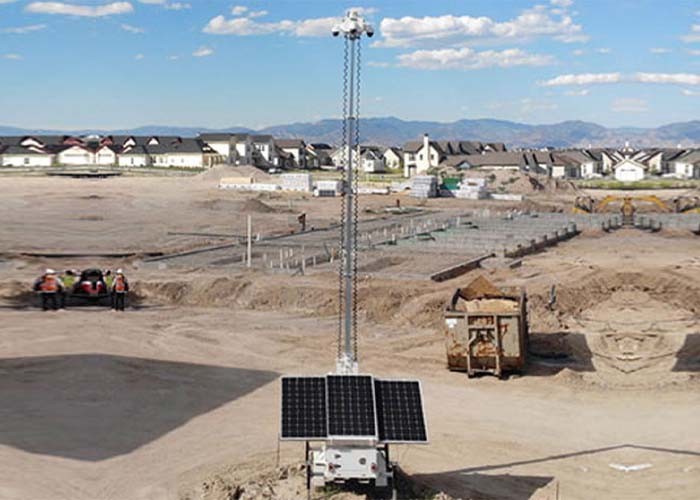
Security can be tough at remote sites. Construction zones, empty lots, and temporary projects often sit in dark or isolated areas. Regular cameras help, but they do not always work well at night or in bad weather. That is where a remote monitoring CCTV trailer becomes a smart solution. When thermal imaging is added, the system can detect heat instead of light. This helps security teams spot people, animals, or vehicles even in total darkness.
What Is Thermal Imaging?
Thermal imaging sounds high tech, but the idea is simple. Everything around us gives off heat. People, animals, and machines all release heat energy. Thermal cameras detect that heat and turn it into a visible image. So instead of relying on light like normal cameras, thermal cameras rely on heat.
This means they can see things even when there is:
- No light
- Heavy fog
- Dust or smoke
- Rainy or cloudy weather
Because of this ability, thermal cameras are a perfect match for a remote monitoring CCTV trailer used in outdoor security.
Why Do Regular Cameras Sometimes Struggle?
Normal CCTV cameras depend on light to capture images. When light disappears, their performance drops. Think about a dark construction site at night. Shadows grow long, lights may fail, and visibility becomes poor.
Here are some common problems with regular cameras:
- Poor visibility at night
- Blurry footage in fog or rain
- Shadows that confuse motion sensors
- Limited detection range in low light
In short, standard cameras sometimes miss important details. Thermal cameras solve many of these issues.
Catch Trouble Early
One of the biggest perks of thermal imaging is early detection. Thermal cameras can spot heat from people or vehicles from far away. That means security teams can notice movement before someone reaches the site. Early detection brings big advantages.
Benefits include:
- Faster security response
- Better protection for equipment
- Less chance of theft
- Stronger perimeter monitoring
When a remote monitoring CCTV trailer uses thermal cameras, it acts like a guard who never sleeps.
No Light? No Problem.
Most security systems need bright lights to work properly. Floodlights and infrared lights are often used to help cameras see. But lights come with problems. Lights can fail. Bulbs burn out. Bright beams can even create harsh shadows. Thermal cameras do not care about lighting. They read heat instead. So even in pitch black conditions, the system can detect movement clearly. That makes thermal imaging perfect for large outdoor sites where lighting may be limited.
Bad Weather Cannot Fool Thermal Cameras
Weather can mess with traditional cameras. Fog, dust, or smoke can block a camera’s view. Rain can make images blurry. Thermal cameras work differently. They detect heat patterns that stay visible even when the weather turns rough. This is why thermal cameras are widely used for outdoor security systems.
Fewer False Alarms
False alarms can drive security teams crazy. Sometimes a camera triggers an alert because of moving branches, animals, or blowing trash. Thermal cameras help reduce these mistakes. They detect heat instead of simple motion. This helps the system focus on real threats.
Common causes of false alarms include:
- Wind moving trees
- Small animals running by
- Shadows changing with light
- Random moving debris
Thermal imaging filters out many of these distractions. That makes a remote monitoring CCTV trailer more accurate and reliable.
Perfect for Large and Remote Sites
Many projects happen far from busy cities. Construction zones, mining operations, and energy facilities often sit in remote areas. These places are hard to monitor with fixed cameras. A trailer-based system solves this problem. A remote monitoring CCTV trailer can be moved and placed exactly where security is needed.
Some models even run on solar power.
Key advantages include:
- Quick setup
- Easy relocation
- Wide coverage areas
- Remote viewing from control centers
It is a flexible security tool that works almost anywhere.
Thermal vs Night Vision
People often mix up night vision and thermal imaging. They are not the same. Night vision cameras amplify available light. If there is very little light, they struggle. Thermal cameras detect heat.
Here is a simple comparison.
| Feature | Night Vision | Thermal Imaging |
|---|---|---|
| Needs light | Yes | No |
| Works in darkness | Limited | Excellent |
| Detects heat | No | Yes |
| Works in fog | Weak | Strong |
This difference makes thermal cameras far more reliable for many security jobs.
Stronger Security Starts with Smarter Technology
Thermal imaging is changing how security systems work. It helps detect threats earlier, improves visibility in darkness, and cuts down on false alarms. When advanced cameras are placed on a flexible system, security becomes even stronger. Organizations looking for smarter monitoring solutions can explore modern systems offered by Allied Remote Technology. Their adaptable mobile CCTV trailer helps protect remote sites with reliable and efficient surveillance technology.
Frequently Asked Questions
What is thermal imaging in security cameras?
Thermal imaging detects heat emitted by people, vehicles, or objects. The camera converts this heat into visible images. This allows security teams to detect movement even in total darkness, fog, or smoke where standard cameras struggle.
Can thermal cameras work during the day?
Yes, thermal cameras work both day and night. Since they rely on heat instead of visible light, bright sunlight or darkness does not affect their performance significantly.
How far can thermal cameras detect intruders?
Detection range depends on the camera model, but many thermal cameras can identify heat signatures from several hundred meters away. Some advanced systems can detect movement even farther.
Do thermal cameras reduce false alarms?
Yes, thermal cameras often reduce false alarms. They focus on heat signatures instead of simple motion. This makes them less likely to trigger alerts from shadows, wind, or moving branches.
Are thermal cameras suitable for outdoor surveillance?
Thermal cameras are excellent for outdoor environments. They perform well in darkness, fog, dust, and smoke. This makes them ideal for construction sites, infrastructure projects, and large remote areas.